Ash dark as night, p.1
Ash Dark as Night, page 1


BOOKS BY GARY PHILLIPS
NOVELS
The Jook
The Perpetrators
Bangers
Freedom’s Fight
The Underbelly
Kings of Vice (as Mal Radcliff)
Warlord of Willow Ridge
Three the Hard Way (collected novellas)
Beat, Slay, Love: One Chef ’s Hunger for Delicious Revenge (written collectively as Thalia Filbert)
The Killing Joke (co-written with Christa Faust)
Matthew Henson and the Ice Temple of Harlem
SHORT STORY COLLECTIONS
Monkology: 15 Stories from the World of Private Eye Ivan Monk
Astonishing Heroes: Shades of Justice
Treacherous: Grifters, Ruffians and Killers
The Unvarnished Gary Phillips: A Mondo Pulp Collection
ONE-SHOT HARRY NOVELS
One-Shot Harry
Ash Dark as Night
IVAN MONK NOVELS
Violent Spring
Perdition, U.S.A.
Bad Night Is Falling
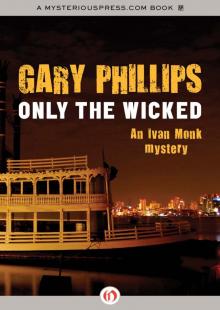
Only the Wicked
ANTHOLOGIES
South Central Noir
Witnesses for the Dead: Stories (co-edited with Gar Anthony Haywood)
Get Up Off That Thing: Crime Fiction Inspired by the Songs of James Brown
MARTHA CHAINEY NOVELS
High Hand
Shooter’s Point
GRAPHIC NOVELS
Shot Callerz
Midnight Mover
South Central Rhapsody
Cowboys
Danger A-Go-Go
Angeltown: The Nate Hollis Investigations
High Rollers
Big Water
The Rinse
Peepland (co-written with Christa Faust)
Vigilante: Southland
The Be-Bop Barbarians
Cold Hard Cash: A Martha Chainey Escapade
ANTHOLOGIES AS EDITOR
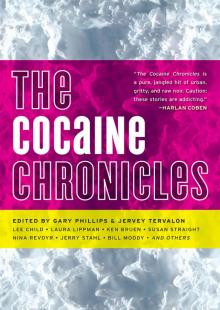
The Cocaine Chronicles (co-edited with Jervey Tervalon)
Orange County Noir
Politics Noir: Dark Tales from the Corridors of Power
The Darker Mask: Heroes from the Shadows (co-edited with Christopher Chambers)
Scoundrels: Tales of Greed, Murder and Financial Crimes
Black Pulp (co-edited with Tommy Hancock and Morgan Minor)
Black Pulp II (co-edited with Tommy Hancock, Ernest Russell, Gordon Dymowski & H. David Blalock)
Day of the Destroyers
Hollis for Hire
Hollis, P.I.
Culprits: The Heist Was Only the Beginning (co-edited with Richard Brewer)
The Obama Inheritance: Fifteen Stories of Conspiracy Noir
Copyright © 2024 by Gary Phillips
All rights reserved.
Published by Soho Press, Inc.
227 W 17th Street
New York, NY 10011
Library of Congress Cataloging-in-Publication Data
Names: Phillips, Gary, author.
Title: Ash dark as night / Gary Phillips.
Description: New York, NY : Soho Crime, 2024. | Series: The Harry
Ingram mysteries ; 2 | Identifiers: LCCN 2023045736
ISBN 978-1-64129-474-4
eISBN 978-1-64129-475-1
Subjects: LCSH: African Americans—California—Los Angeles—Fiction. | Photojournalists—Fiction. | African American veterans—Fiction. | African American private investigators—Fiction. | Los Angeles (Calif.)—History—20th century—Fiction. | LCGFT: Noir fiction. | Historical fiction. | Novels.
Classification: LCC PS3566.H4783 A87 2024 | DDC 813/.54—dc23/eng/20231004
LC record available at https://lccn.loc.gov/2023045736
Interior map © Mike Hall
Interior design by Janine Agro, Soho Press, Inc.
Printed in the United States of America
10 9 8 7 6 5 4 3 2 1
To Pierre Desir, the Domino King
I feel like the Lonely Ranger . . . I feel very much like the Lonely Ranger.
—Nguyễn Cao Kỳ
CHAPTER ONE
Like a runaway virus, fire and destruction was everywhere, including this stretch of Vermont Avenue near Watts. Harry Ingram crossed the avenue to click off shots of a burning trophy store. He wasn’t worried about being hit by a car as there was little traffic except for fire and police vehicles. Plastic trophies melted on shelves in the display window. He focused on one in particular, the figure of a man on an orb triumphantly holding a bowling ball aloft. Over several clicks of his camera, the figure withered away in streams of plastic yet still the bowling ball remained untouched . . . until it too succumbed to the flames. Ingram felt neither excited nor fearful, remaining stationary as rioters and police tore around him. If he had any sense, he reflected dimly, he should be awash in both emotions.
Most of the other news people out here covering the events were white men from the white press. The Times and the Herald Examiner didn’t have any negro reporters. Now maybe one of these fellas might well get a brick upside their head from a participant, but were less likely to be jacked-up by the law. Ingram realized either side might turn on him. There was another colored freelancer somewhere out here he knew, dashing about for Jet magazine. Maybe when they both got a beatdown from the cops, they could compare notes in jail.
Yet here he was, wearing a linen coat and a snap-brim hat like he was on his way to the fifth race at Hollywood Park. He carried a recent model Canon in hand and his battered Korean War–era Speed Graphic around his neck, the latter more for good luck than practicality. Unlike the Canon, which used film rolls, the Graphic had to be loaded one 4x5 film plate at a time. Though like the old timers before him, he could deftly remove one plate to load in another rapidly. To top it off, it was Friday the thirteenth. He almost chuckled.
“Get the fuck out of here,” a cop yelled at him from his Plymouth Fury prowler as he roared past. “This ain’t a goddamn tourist outing.”
Ingram resisted yelling back that he wasn’t sightseeing but moved along, though he wasn’t leaving the area. A man and woman rushed past, taking turns pushing a shopping cart filled with recently acquired goods, including a toaster oven. As one of them pushed, the other held on to the cart to prevent it from tipping over. The thing was filled to overflow.
A ragtop ’57 Chevy Bel Air screeched to a stop at the end of the block in front of an appliance store advertising television and stereo sets available on layaway. Ingram watched two soul brothers exit the car. One held a bat and the other a prybar. Both wore gloves. Methodically, they went to work on the store’s windows and security gate, busting out the glass. The man with the prybar popped the padlock on the gate. This time, Ingram practiced caution as he took shots. He crouched down behind the fender of a food delivery truck across the street. Two of the vehicle’s tires were flat and the rear double doors hung open at broken angles, the contents long gone. The two regimented looters drove off without entering the establishment.
Ingram flinched at the blast of a shotgun. That wasn’t a civilian letting loose with the buckshot. Yet he waited, his Army training kicking in. Without looking at his watch, he had a sense when the four minutes had passed. A pick-up truck and a station wagon appeared in front of the appliance store. Out came several men and a woman. With the collective coordination of worker ants, they quickly transferred those layaway items to their vehicles. Mission accomplished, they too drove away.
Ingram got this all on film. While there was plenty of chaotic, spontaneous stealing around him, there were those who were clearly more organized. He wasn’t condoning thievery, but he did appreciate the ingenuity.
It was a hot August and everybody was sweating. He’d worn his coat so as to keep expended film rolls in its pockets along with a few film plates. Ingram supposed one of these days he ought to get himself one of those safari-like photographer’s vests. The last two years or so he’d been getting more photography work and doing less process serving—though he’d had a matter that earned him a nice little sum the other week serving divorce papers on an egghead type out in Eagle Rock. An aeronautical engineer who taught part time at CalTech and liked to frequent a certain strip club for gentlemen. Sure enough, he got involved with one of the dancers.
Ingram exchanged a used roll for a fresh one. His hands were steady, pulse normal. The singed odor of charred wood omnipresent in the air. Yesterday, the first full day of the rioting, he’d gone about like now, on foot. He seemed then to somehow be invisible in the melee unfolding around him. Yet today, Ingram interpreted the shotgun blast and cop yelling at him as warnings he best not ignore. He wasn’t turning away but he wasn’t going to be foolhardy either. If he was going to get arrested or die, he’d want his pictures to be testament that he’d been doing his job.
A car lurched into view out of the mouth of an alley. It was a Dodge DeSoto, a late ’40s model, Ingram estimated. The driver was an older white man who was bleeding from his hairless scalp. The windshield was cracked. A trio of young Black men emerged from the alley and ran after the car as it weaved onto the roadway, losing speed rather than increasing velocity. The young men threw rocks and glass bottles at the car and yelled at the driver. Ingram snapped away. A green 7 Up bottle exploded in emerald shards that sparkled in the sun against the car’s trunk.
“Get that old cracker buzzard,” one of them said.
“Cheap motherfuckah owes me three weeks’ pay,” another said. He was running fast and still threw a sizable rock with the force and precision of a Don Drysdale pitch. The projectile busted out the driver’s side window, shattering glass and striking the driver. The DeSoto ran up on the sidewalk, nearly plowing through a store. The motor idled, having slipped out of gear. The youngsters descended on the car and yanked the driver out of it, then shoved him back and forth, laughing. Ingram rushed over.
“That’s enough, you’ll kill him,” he warned.
“Fuck you, he has it coming.”
Grunting, Ingram inserted himself as best he could between the angry youths and the object of their scorn. “Look, this isn’t right, come on. I don’t know what he’s done, but beating a man to death can’t be the answer.”
“Who the hell are you, Uncle Tom?”
“Yeah, Rastas,” another taunted.
“I’m the one that’s gonna put you on Front Street.”
“A snitch, huh?”
“No, but you’ll be in all the news.”
The tough who was holding the older man by his shirt front let go. The man sagged against his car but remained upright, breathing hard. The attacker took ahold of Ingram’s camera draped around his neck on a strap.
“What makes you think we won’t take your little toy from you?” The youngster was built like a power forward for the Lakers—tall and lean muscled in a crisp athletic tee, crème-colored cotton pants, and black canvas Keds.
“You can but you’ll have to kick my ass too. I know you can but I’ll make it tough and then if you kill me, how righteous does that make you?”
“Makes me the winner, fool.”
They stared at each other until the one who’d thrown the rock through the car window tapped this one’s arm. “Let’s go, we made our point.”
“Yeah, we got what we came for.” The third one was stocky with rings on his left middle and little fingers. He took several bills from the older man’s wallet and tossed it aside. He also held his watch and diamond ring aloft. “When we pawn this, we’ll get what’s coming to us.”
“Goddamn right we will,” the taller one said, taking the ring, smiling broadly. “See you around, clown,” he said to Ingram. The three departed, snickering and guffawing, full of their youth and the power of their bodies.
“You just going to let them rob me like that?”
Ingram turned to regard the ingrate, his fear turning into anger. The man’s face was lined and his eyes watery. Broken veins were evident along the bridge of his nose. “You’re alive, you’re welcome.”
He glared at Ingram indignantly, alternating between dabbing at his cut cheek and cut head with a bloodied handkerchief. “What kind of Good Samaritan are you?”
“A practical one.”
“Oh, I get it, got your hand out like all the rest, that it? Expect me to pay you, is that it?”
“Man, you’re lucky they just threw rocks and bottles at you.”
“What the hell does that mean?”
Ingram walked away so as not to blow his top. He was pretty sure the indignant bastard was glaring at him. People ran past, some laughing, some seemingly unsure of what they were doing. Sirens and smoke were everywhere. Ingram looked back. The man got in his car, backed it off the sidewalk, and once in the street, righted the DeSoto and left the scene. On Ingram went.
On another block, eerily quiet, Ingram stopped and placed his camera on the hood of a truck and again changed the film roll. He had several exposed rolls in his jacket pockets. Ingram looked around and spotted a wrinkled paper bag on the sidewalk. It had the logo of a chain restaurant printed on it along with their famous slogan, “Don’t Cook Tonight, Call Chicken Delight.” Luckily, the bag’s interior was clean, and he stuck his exposed rolls in there and rolled the top closed. Now where to hide his snaps.
As he tried to figure this out, Ingram continued walking along Vermont. Up ahead, a group of young people were hemmed up in the alcove of a furniture store being routed by several police. Batons jabbed the youngsters in the stomachs or rose and fell on their heads. Additionally, two German shepherds barely restrained on leashes were barking, leaping and snarling at the trapped citizenry.
“Call the fuckin’ dogs off, man,” one of the assaulted hollered. A gash on his forearm was bleeding profusely.
“Aw, you aren’t scared of ole’ Bruno are you?” one of the cops holding on to one of the dogs taunted. “He just wants to say howdy.”
“Yeah, he just wants to give you a friendly lick,” the officer holding Bruno said. They both laughed.
These cops continued terrorizing the young people they’d bunched up. No clear orders were being given and as far as Ingram could tell, the youngsters hadn’t stolen anything as there were no items on the sidewalk. He clicked off several shots. One of the cops handling a dog pointed at him.
“Who the hell are you?”
“Press,” Ingram answered, making sure to take a couple of close-up photos of the officer and the dog. His hands were steady even though he knew what was coming next.
The helmeted cop broke away from the others and started toward him, his animal baring its teeth. A Channel 5 Ford panel truck was passing by, and the driver applied the brakes. From the rear of the truck a white newsman and a cameraman stepped out. Noting the new presence, the officer flicked the dog’s leash and uttered a command. The animal sat on his haunches, still eyeing Ingram.
“What’s the problem, officer?” the television newscaster said. The cameraman was filming the police officer with a Super 8 camera mounted on his shoulder. Ingram had used one at a trade show not long ago. He’d gotten a kick out of making moving pictures.
The cop regarded him blankly. “There’s a riot going on, or didn’t you notice?”
“Mr. Ingram is rioting?”
“You know this spade?”
“This gentlemen is a newsman, like me.”
It took Ingram until then to realize the newscaster was familiar to him not just from seeing him on the TV. He’d met the man briefly when they’d both covered a picket by the Nation of Islam at a White Front department store a couple of years ago. His name was Stan Chambers.
“Then you and him better get a move on.”
The cameraman turned his camera to film the other cops.
“What did those folks do?” Chambers asked one of the cops, indicating the youngsters.
“Suspected of starting fires.”
“Then why aren’t they under arrest?”
“They were resisting arrest.”
“No they weren’t,” Ingram interjected. “The cops were having their fun with them. I’ve got the pictures to prove it.”
The uniformed officer put his blank stare on Ingram. “You a lowlife lawyer in addition to being a nosey picture taker?”
“I know enough,” Ingram said.
The cop turned and called out. “Call a wagon and get these negro hooligans booked.”
He and his dog walked back to join his fellow officers. Nearby, a fresh plume of black smoke rose behind a row of storefronts. Familiar with the area, Ingram could tell this new fire was coming from a residential section.
“Do me a favor, would you?” Ingram said to Chambers. “Take this bag of my film rolls back to the station. If you find something you like in the snaps, okay by me to use a few on air, as long as you give me credit.”
“Deal,” the newscaster said. He grabbed the paper bag from Ingram, then held out his other hand. “We haven’t been formerly introduced, Mr. Ingram. I’m Stan Chambers.”
“I know. It’s a pleasure. Call me Harry.” They shook hands.
“You know we’ll pay you too if we use any of your shots. It’s policy.”
Ingram shrugged a shoulder. “That’s all gravy. The main thing is I don’t want to be walking around with them if I can help it.”
“Worried you’ll lose them in all this, huh?”
“Worried the cops will take the rolls,” Ingram specified.
“The police have confiscated your pictures before?” He said it sincerely, the notion foreign to him.
“That ain’t the half of it.”
Chambers made a curt nod and he and his cameraman got back in their van and drove off in search of another story in the whirlwind of anger and frustration. Ingram trudged on, fire trucks, ambulances, police cars and people rushing about around him. Shouting, screaming, glass shattering and running feet assailed his senses. It was like in firefights in Korea: scared shitless but his panic in check. Repulsed yet attracted to the conflict. Maybe a head shrinker could figure it out. Another gunshot sounded, reminding him that as in the war, death could come at any moment from any direction. There would be no premonition of your end, it simply happened, you were gone and the living went on without you.