Dancing Lessons for the Advanced in Age

Dancing Lessons for the Advanced in Age

Bohumil Hrabal

Fiction

Rake, drunkard, aesthete, gossip, raconteur extraordinaire: the narrator of Bohumil Hrabal’s rambling, rambunctious masterpiece Dancing Lessons for the Advanced in Age is all these and more. Speaking to a group of sunbathing women who remind him of lovers past, this elderly roué tells the story of his life—or at least unburdens himself of a lifetime’s worth of stories. Thus we learn of amatory conquests (and humiliations), of scandals both private and public, of military adventures and domestic feuds, of what things were like “in the days of the monarchy” and how they’ve changed since. As the book tumbles restlessly forward, and the comic tone takes on darker shadings, we realize we are listening to a man talking as much out of desperation as from exuberance.Hrabal, one of the great Czech writers of the twentieth century, as well as an inveterate haunter of Prague’s pubs and football stadiums, developed a unique method which he termed “palavering,” whereby characters gab and soliloquize with abandon. Part drunken boast, part soul-rending confession, part metaphysical poem on the nature of love and time, this astonishing novel (which unfolds in a single monumental sentence) shows why he has earned the admiration of such writers as Milan Kundera, John Banville, and Louise Erdrich.From Publishers WeeklyThe unnamed narrator of this comic rant proclaims that any book worth its salt is "meant to make you jump out of bed in your underwear and run and beat the author's brains out." Czech novelist Hrabal (Closely Watched Trains) very nearly fills that peculiar bill in this humorous and breathless affair, which is told in one never-ending sentence?a technique that just may make readers pay him the ultimate compliment by looking around for handy blunt objects. The narrator, a scurrilous old man who claims to have been a shoemaker and a brewer, approaches six sunbathing women and embarks on a rambling monologue about his past loves, the past in general and his "magic hands for what we called contessa shoes." He enjoys telling scandalous tales about his betters, including the one about the old emperor looking up women's skirts. Hrabal, who has been cited as a major literary influence by Milan Kundera and Ivan Klima, among others, is generally considered the most revered living Czech author. It's easy to see why. As this novel (originally published in Czechoslovakia in 1964) plays around with Czech history, juxtaposing the public life of the country with the private life of the narrator, Hrabal displays abounding energy and a rambunctious wit. Copyright 1995 Reed Business Information, Inc. From BooklistHrabal, one of the foremost contemporary Czech writers, has devised a provocative little novel for special readers. In a breathless monologue--in fact, in one unbroken sentence--an old shoemaker spouts off to a captive audience of young women about his life and ideas. From political history ("his son, the crown prince, was forced to marry Princess Stephanie of Belgium, but he was wild for Vetsera's body, she had these gigantic breasts and eyes" ) to morality ("Christ wanted us to love our neighbors, he wanted discipline, not love on the sofa the way some mealy-brained idiots would have it" ), the old man perambulates over a wide range of territory, spreading recollections and opinions far and wide. For readers who appreciate language for its own sake, this short book is fertile ground; for those who need a firm plot as anchorage, they had best turn elsewhere. For active foreign-literature collections. Brad Hooper
Read online
  • 16
Fire in the Abyss

Fire in the Abyss

Stuart Gordon

Stuart Gordon

Snatched from the 16th century by the U.S. military's Project Vulcan, the Elizabethan explorer Sir Humphrey Gilbert awakens to find himself a prisoner in New Jersey. After establishing a telepathic link with his fellow DTIs (Distressed Temporal Immigrants), including a magical Egyptian priestess named Tari, a Norse giant from 11th century Greenland, and a dancer from ancient America, Sir Humphrey executes the most astonishing escape in (and out of) history.
Read online
  • 15
Single Combat

Single Combat

Dean Ing

Dean Ing

The exciting sequel to Systemic Shock from the bestselling author of The Ransom of Black Stealth One. The nuclear war against China and India has left America victorious, but devastated, and a strong and survival-minded government has seized control of what's left. "Ing's most ambitious book to date."--Booklist.About the AuthorDean Ing has worked as a USAF interceptor crew chief, a senior research engineer in the aerospace industry, a builder and driver of sports-racing cars, and a university professor. He has a doctorate in communications theory. Ing is the author of the New York Times bestseller The Ransom of Black Stealth One, The Nemesis Mission, and The Skins of Dead Men. He lives in Ashland, Oregon.
Read online
  • 14
July 7th

July 7th

Jill McCorkle

Jill McCorkle

An unsolved murder at the Quik Pik propels us into twenty-four hours of rich comedy and fast action in the North Carolina town of Marshboro. Two memorable presences are Granner Weeks, a white widow, and Fannie McNair, a black housekeeper. They know that people learn to live by living with each other--in each other's ways and in each other's hearts. "With these JULY 7th and The CHEER LEADER . . . McCorkle emerges as the most exciting young American writer of fiction to come along in years."--Cleveland Plain Dealer.
Read online
  • 14
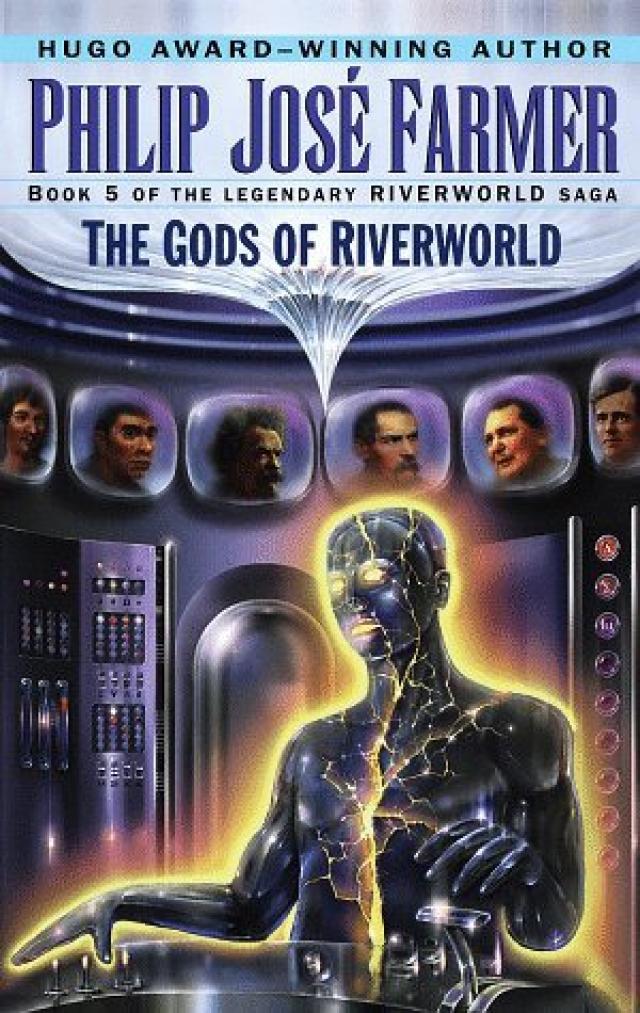
Riverworld05- Gods of Riverworld (1983)

Riverworld05- Gods of Riverworld (1983)

Philip José Farmer

Science Fiction & Fantasy

EDITORIAL REVIEW: Thirty billion people from throughout Earth’s history have been resurrected along the great and winding waterways of Riverworld. Most began life anew—accepting without question the sustenance provided by their mysterious benefactors. But a rebellious handful, including Mark Twain, Richard Burton, and Peter Jairus Frigate, burned to confront the unseen masters who controlled their fate—and these few launched an invasion that will ultimately yield the mind-boggling truth. The story was chronicled in four previous volumes, and is now concluded in *Gods of Riverworld*. Riverworld’s omnipotent leaders must finally be confronted, and the renegades of Riverworld—led by the intrepid Sir Richard Francis Burton—will control the fantastic mechanism that rules them. But the most awesome challenge lies ahead. For in the vast corridors and secret rooms of the tower stronghold, an unknown enemy watches and waits to usurp the usurpers....Biography From Wikipedia - Philip José FarmerBorn: January 26, 1918, Terre Haute, Indiana, USADied: February 25, 2009 (aged 91), Peoria, Illinois, USAPhilip José Farmer (January 26, 1918 – February 25, 2009) was an American author, principally known for his award-winning science fiction and fantasy novels and short stories.Farmer is best known for his sequences of novels, especially the World of Tiers (1965–93) and Riverworld (1971–83) series. He is noted for the pioneering use of sexual and religious themes in his work, his fascination for, and reworking of, the lore of celebrated pulp heroes, and occasional tongue-in-cheek pseudonymous works written as if by fictional characters. Farmer often mixed real and classic fictional characters and worlds and real and fake authors as epitomized by his Wold Newton family group of books. These tie all classic fictional characters together as real people and blood relatives resulting from an alien conspiracy. Such works as The Other Log of Phileas Fogg (1973) and Doc Savage: His Apocalyptic Life (1973) are early examples of literary mashup.Literary critic Leslie Fiedler compared Farmer to Ray Bradbury as both being "provincial American eccentrics" ... who... "strain at the classic limits of the [science fiction] form", but found Farmer distinctive in that he "manages to be at once naive and sophisticated in his odd blending of theology, pornography, and adventure".Farmer was born in North Terre Haute, Indiana. According to colleague Frederik Pohl, his middle name was in honor of an aunt, Josie. Farmer grew up in Peoria, Illinois, where he attended Peoria High School. His father was a civil engineer and a supervisor for the local power company. A voracious reader as a boy, Farmer said he resolved to become a writer in the fourth grade. He became an agnostic at the age of 14. At age 23, in 1941, he married and eventually fathered a son and a daughter. After washing out of flight training in World War II, he went to work in a local steel mill. He continued his education, however, earning a bachelor’s degree in English from Bradley University in 1950.Farmer had his first literary success in 1952 with a novella called The Lovers, about a sexual relationship between a human and an extraterrestrial. It won him the Hugo Award as "most promising new writer", the first of three. Thus encouraged, he quit his job to become a full-time writer, entered a publisher’s contest, and promptly won the $4,000 first prize for a novel that contained the germ of his later Riverworld series. The book was not published and Farmer did not get the money. Literary success did not translate into financial security, and in 1956 he left Peoria to launch a career as a technical writer. He spent the next 14 years working in that capacity for various defense contractors, from Syracuse, New York to Los Angeles, California, while writing science fiction in his spare time.He won a second Hugo after the publication of his 1967 novella Riders of the Purple Wage, a pastiche of James Joyce’s Finnegans Wake as well as a satire on a futuristic, cradle-to-grave welfare state. Reinvigorated, Farmer became a full-time writer again in 1969. Upon moving back to Peoria in 1970, he entered his most prolific period, publishing 25 books in 10 years. His novel To Your Scattered Bodies Go (a reworked, previously unpublished version of the prize-winning first novel of 20 years before) won him his third Hugo in 1971. A 1975 novel, Venus on the Half-Shell, created a stir in the larger literary community and media. It purported to be written in the first person by one “Kilgore Trout”, a fictional character appearing as an underappreciated science fiction writer in several of Kurt Vonnegut’s novels. The escapade did not please Vonnegut when some reviewers not only concluded that it had been written by Vonnegut himself, but that it was a worthy addition to his works. Farmer did have permission from Vonnegut to write the book, though Vonnegut later said he regretted giving permission.Farmer had both critical champions and detractors. Leslie Fiedler proclaimed him "the greatest science fiction writer ever" and lauded his approach to storytelling as a “gargantuan lust to swallow down the whole cosmos, past, present and to come, and to spew it out again”. Isaac Asimov praised Farmer as an "excellent science fiction writer; in fact, a far more skillful writer than I am...." But Christopher Lehmann-Haupt described him in The New York Times in 1972 as “a humdrum toiler in the fields of science fiction”.Farmer died on February 25, 2009. At the time of his death, he and his wife Bette had two children, six grandchildren and four great-grandchildren.Riverworld seriesThe Riverworld series follows the adventures of such diverse characters as Richard Burton, Hermann Göring, and Samuel Clemens through a bizarre afterlife in which every human ever to have lived is simultaneously resurrected along a single river valley that stretches over an entire planet. The series consists of To Your Scattered Bodies Go (1971), The Fabulous Riverboat (1971), The Dark Design (1977), The Magic Labyrinth (1980) and Gods of Riverworld (1983). Although Riverworld and Other Stories (1979) is not part of the series as such, it does include the second-published Riverworld story, which is free-standing rather than integrated into one of the novels.The first two Riverworld books were originally published as novellas, "The Day of the Great Shout" and "The Suicide Express", and as a two-part serial, "The Felled Star", in the science fiction magazines Worlds of Tomorrow and If between 1965 and 1967. The separate novelette "Riverworld" ran in Worlds of Tomorrow in January 1966. A final pair of linked novelettes appeared in the 1990s: "Crossing the Dark River" (in Tales of Riverworld, 1992) and "Up the Bright River" (in Quest to Riverworld, 1993). Farmer introduced himself into the series as Peter Jairus Frigate (PJF).The Riverworld series originated in a novel, Owe for the Flesh, written in one month in 1952 as a contest entry. It won the contest, but the book was left unpublished and orphaned when the prize money was misappropriated, and Farmer nearly gave up writing altogether. The original manuscript of the novel was lost, but years later Farmer reworked the material into the Riverworld magazine stories mentioned above. Eventually, a copy of a revised version of the original novel surfaced in a box in a garage and was published as River of Eternity by Phantasia Press in 1983. Farmer's Introduction to this edition gives the details of how it all happened.World of Tiers seriesThe series is set within a number of artificially constructed parallel universes, created tens of thousands of years ago by a race of human beings who had achieved an advanced level of technology which gave them almost godlike power and immortality. The principal universe in which these stories take place, and from which the series derives its name, consists of an enormous tiered planet, shaped like a stack of disks or squat cylinders, of diminishing radius, one atop the other. The series follows the adventures of several of these godlike humans and several "ordinary" humans from Earth who accidentally travel to these artificial universes. (One of those "ordinary" humans was Kickaha, real name Paul Janus Finnegan (PJF) who becomes the main protagonist in the series.) The series consists of The Maker of Universes (1965), The Gates of Creation (1966), A Private Cosmos (1968), Behind the Walls of Terra (1970), The Lavalite World (1977) and More Than Fire (1993). Roger Zelazny has mentioned that The World of Tiers was something he had in his mind when he created his Amber series. A related novel is Red Orc's Rage (1991), which does not involve the principal characters of the other books directly, but does provide background information to certain events and characters portrayed in the other novels. This is the most "psychological" of Farmer's novels.
Read online
  • 13
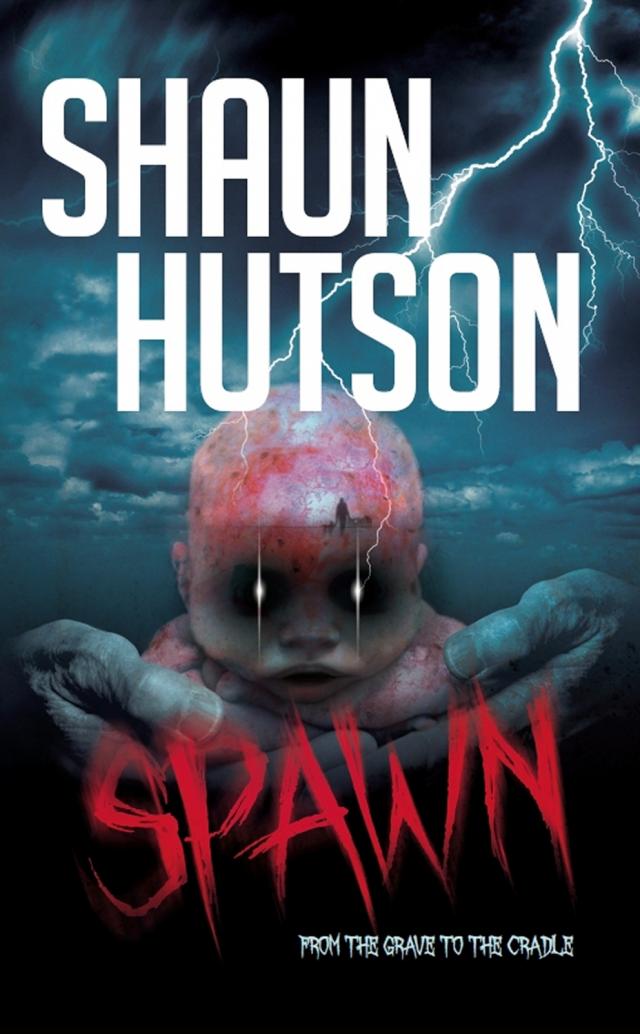
Spawn

Spawn

Shaun Hutson

Shaun Hutson

A psychologically complex terror thriller about two disturbed men and the unnatural consequences of their deedsHarold Pierce didn't mean to kill his baby brother all those years ago. He didn't intend to incinerate him in a fire, but he did, and he has spent most of his adult life in a psychiatric hospital because of it. Upon release he is given a job as a hospital porter, but what the job involves brings back memories of what happened to his brother, and they begin to torment Harold. In the small town where he lives terror is mounting because of the escape from prison of psychopath Paul Harvey. Within days of his escape a horrifying series of murders begins, but there is much worse to come. Pierce and Harvey, both disturbed and guarding terrible secrets, are about to unleash a terror beyond belief.**
Read online
  • 13
(3/3) Bridle the Wind

(3/3) Bridle the Wind

Aiken, Joan

Aiken, Joan

After visiting his family in England, Felix is on his way back to Spain when he's shipwrecked off the coast of France. He is taken in by monks to recover from his ordeal--but it soon becomes clear to him that he is actually being held prisoner. Felix encounters an injured boy, Juan, on the grounds of the monastery and saves him from death. The two boys escape and continue on to Spain together--but a gang is pursuing Juan, and the journey is more dangerous than they imagined.
Read online
  • 13
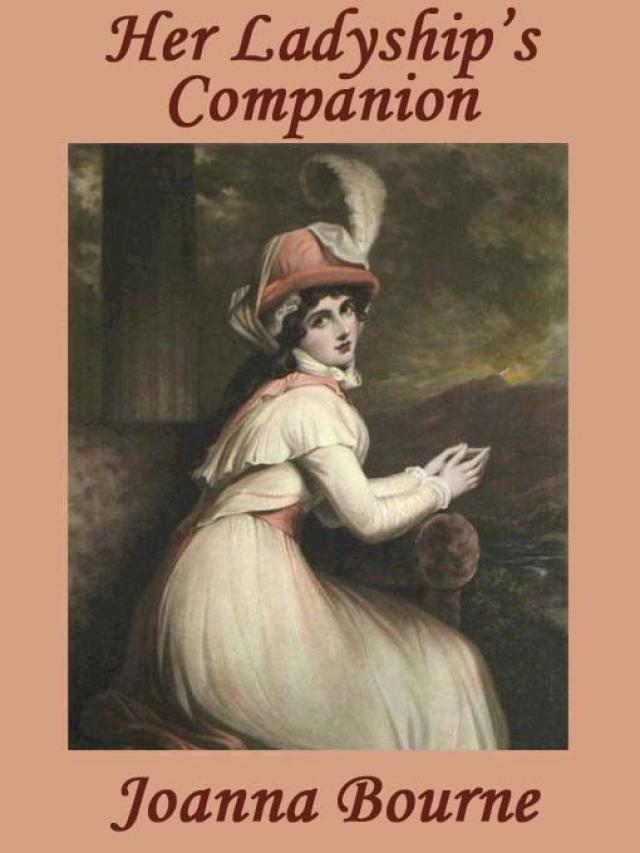
Her Ladyship's Companion

Her Ladyship's Companion

Joanna Bourne

Joanna Bourne

When Melissa Rivenwood accepted the position of companion to Lady Dorothy, she had no idea what intrigue enveloped remote Vinton Manor. Why was 7-year-old Robbie, the future Earl of Keptford, so terrified? The trio of fascinating men who surrounded Melissa hid some dangerous family secrets that undoubtedly led to peril-and her suspicions fell on the one man she loved. Regency Gothic by Joanna Bourne; originally published by Avon
Read online
  • 12
Prelude to Love

Prelude to Love

Joan Smith

Joan Smith

Vanessa Bradford’s disappointment at missing the military ball was enormous—and she scarcely believed her father’s insistence that her mission was one of uptmost secrecy and of the greatest importance to England. Then two handsome strangers both offered their assistance, and she feared one—or both—might be French spies… Regency Romance by Joan Smith; originally published by Fawcett Crest
Read online
  • 12
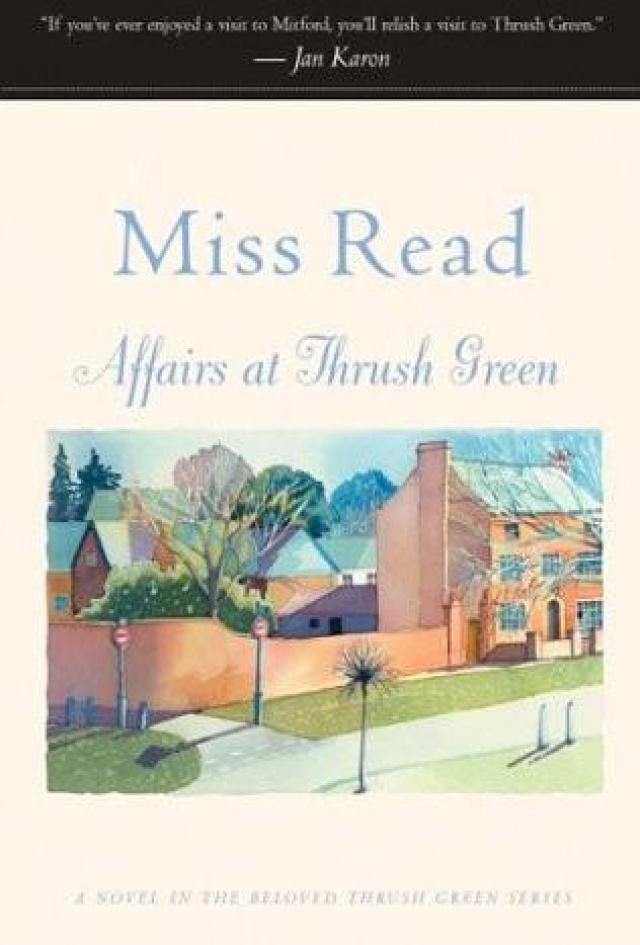
(7/13) Affairs at Thrush Green

(7/13) Affairs at Thrush Green

Miss Read

Miss Read

Product DescriptionIn Affairs at Thrush Green, Miss Read continues the fortunes of the Thrush Green families whom we last met in Gossip from Thrush Green. Here we follow the kindly vicar, Charles Henstock, to the neighboring Lulling, after his home was burned to the ground at the end of the earlier novel. Going to a new church is never easy, even in the best of times; indeed, poor Dr. Henstock encounters some very redoubtable females in Lulling. A full-scale power struggle erupts over the question of kneeling cushions for the Lady Chapel, and other difficulties revolve around the crotchety old sexton Albert Piggott.Meanwhile, a mysterious stranger arrives at the Fuschia Bush cafe, and its rivalry with the Two Pheasants becomes more acute. One knows, however, that Miss Read will make all come right in the end.About the AuthorMiss Read is the pseudonym of Mrs. Dora Saint, a former schoolteacher beloved for her novels of English rural life, especially those set in the fictional villages of Thrush Green and Fairacre. The first of these, Village School, was published in 1955, and Miss Read continued to write until her retirement in 1996. In the 1998, she was awarded an MBE, or Member of the Order of the British Empire, for her services to literature. She lives in Berkshire.
Read online
  • 11
183